India-New Zealand free trade agreement enters into force on October 20
New Zealand removed import duties on all Indian goods from the first day, while India kept dairy and some farm items outside its concessions.
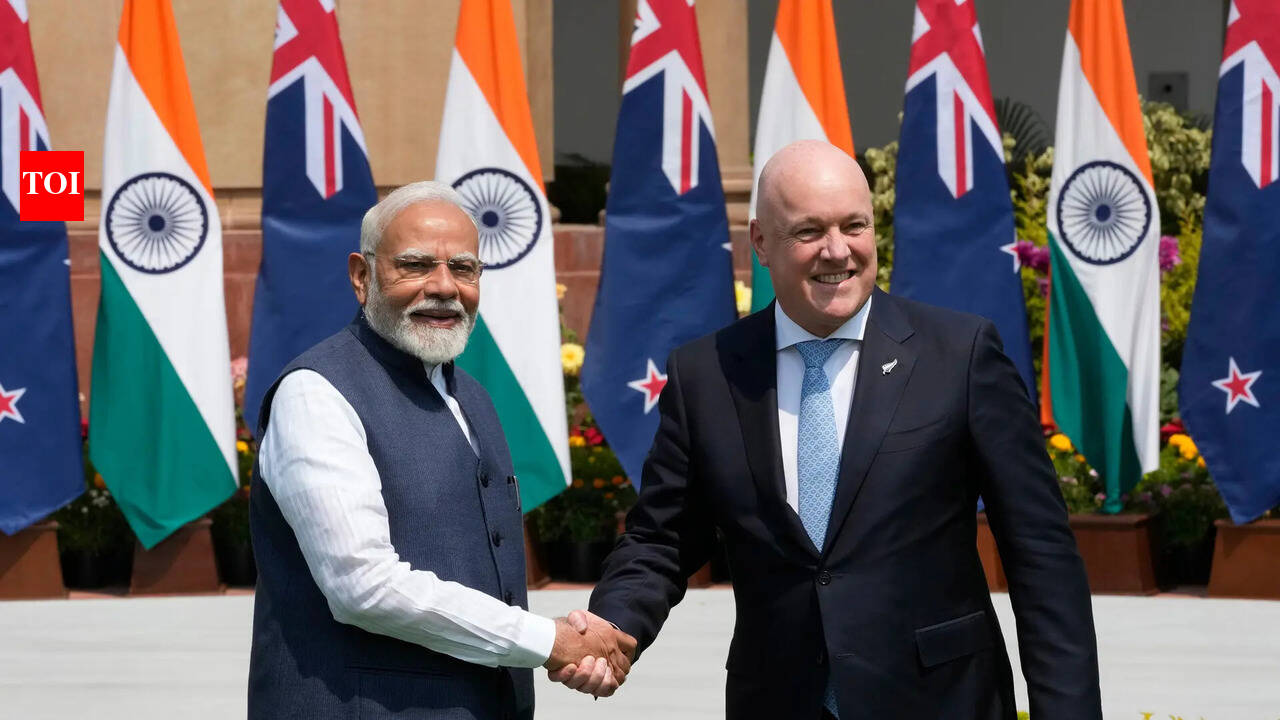
The India-New Zealand free trade agreement came into force on Tuesday, October 20, 2026, giving Indian exports duty-free entry across New Zealand's tariff lines (The Hindu, Pratidin Time, Nagaland Post). Commerce and Industry Minister Piyush Goyal said labour-intensive sectors including textiles, apparel, leather, footwear and gems would gain from the removal of tariffs, while sensitive Indian sectors such as dairy, onion and pulses were kept protected (Mint, The Indian Express). The Hindu reported that 95% of New Zealand's exports to India would enter tariff-free or at sharply reduced levies (The Hindu).
What every report agrees on
All the reports are from Indian outlets and agree on the core terms: New Zealand eliminated import duties on 100% of Indian goods from day one (The Times of India, The Sentinel, Hindustan Times), New Zealand committed to facilitate $20 billion of investment in India over 15 years (Nagaland Post, The Indian Express), and the two governments set a target of doubling bilateral trade by 2030 (Hindustan Times, Mint). The agreement also opens study, work and professional mobility routes (Pratidin Time, The Sentinel), and The Hindu reported new visa categories for Indians (The Hindu). Ahead of the start date the Commerce Ministry asked industry bodies to keep consignments ready for a ceremonial flag-off (The Hindu BusinessLine), and Maharashtra Chief Minister Devendra Fadnavis described the first export of a Pune-manufactured JCB machine to New Zealand as a milestone for the state's manufacturing (The Free Press Journal). The industry body CII said MSMEs should move quickly to use the new openings (PSU Watch).
How the left-leaning press told it
Hindustan Times, The Indian Express and The Hindu: Zero-duty access with safeguards
Left-leaning outlets led with the same account as the rest: Hindustan Times, rated centre-left, reported the pact eliminating tariffs on Indian exports, the $20 billion investment pledge and the NZ$7 billion trade target, and placed it as the seventh FTA operationalised in five years (Hindustan Times). The Indian Express, rated centre-left, carried Goyal's list of gaining sectors alongside the carve-outs for dairy, onion and pulses (The Indian Express). The Hindu, rated centre-left, added the new visa categories and the detail that 95% of New Zealand's exports to India would enter tariff-free or at sharply reduced levies, and noted the agreement was signed on April 27 in New Delhi (The Hindu).
How the right-leaning press told it
The Times of India and The Economic Times: Zero-duty export windfall
The Times of India, rated centre-right, reported from a commerce and industry ministry presentation cited by ANI that duty-free access would apply across New Zealand's entire market from October 20, with labour-intensive sectors expected to benefit, and framed the deal around the target of doubling trade to $7 billion by 2030 (The Times of India). The Economic Times, rated centre-right, reported that Goyal and New Zealand Trade Minister Todd McClay had set out the opportunities for exporters, farmers and MSMEs, repeating the 100% duty-free access and the 2030 target (The Economic Times). Neither differed from the left-leaning reports in its account of the terms.
How the centre told it
Mint: Zero-duty export windfall
Mint, rated centre, reported the start date through Goyal's announcement, naming textiles, leather and gems as beneficiaries and saying the deal was expected to catalyse $20 billion in investment and double bilateral trade to $7 billion by 2030 (Mint). It recorded that sensitive Indian sectors such as dairy remain protected and listed MSMEs, artisans, farmers and women entrepreneurs among those the minister said would gain (Mint).
The coverage of this story does not divide along left and right lines.
What the record shows
The reports rest largely on the commerce ministry's presentation and statements by Goyal, with The Times of India attributing its figures to an ANI-cited ministry presentation (The Times of India) and The Economic Times citing Goyal and New Zealand's Todd McClay (The Economic Times). Pratidin Time attributed its account of the terms, including the study and work routes, to the Global Trade Research Initiative (Pratidin Time). The reports use two formulations of the trade target: Hindustan Times gives NZ$7 billion by 2030 (Hindustan Times), while Mint and The Times of India give $7 billion (Mint, The Times of India). They also count the pact differently in India's trade architecture: Pratidin Time calls it the 17th operational trade pact (Pratidin Time), while Hindustan Times calls it the seventh FTA operationalised in the past five years (Hindustan Times). None of the reports read here contains an independent estimate of how much Indian exports will rise, and the claimed gains rest on official and industry statements rather than trade data (Mint, PSU Watch).
Drafted by the Alethman engine from 13 independent reports, and checked by an editor before publication. An outlet's side comes from published media-bias ratings (Media Bias/Fact Check, AllSides) or documented ownership, named under the coverage bar; Alethman does not rate outlets itself.
Still open
- How much Indian exports will actually increase under the agreement, which the reports do not quantify independently.
- What share of New Zealand's tariff lines were already duty-free before the pact took effect.
- Whether the $20 billion investment pledge carries any enforceable schedule or conditions.
The record 13 reports
The reports this article is built from; 12 were read in full for it. Each link opens the outlet's own page.
- The HindureadIndia-New Zealand FTA comes into force; new visa categories for Indians, zero-duty access for exportsOct 20, 2026
- Oct 20, 2026
- Oct 20, 2026
- Oct 19, 2026
- Oct 19, 2026
- The Times of IndiareadIndia-New Zealand FTA effective from Oct 20; targets double trade to $7bn by 2030Oct 19, 2026
- Oct 20, 2026
- Hindustan TimesreadIndia-New Zealand free trade agreement takes effect, eliminating tariffs on Indian exportsOct 19, 2026
- Oct 16, 2026
- The Free Press JournalreadIndia-New Zealand FTA Comes Into Effect: CM Devendra Fadnavis Hails First 'Made In India' JCB Export, Calls It Milestone For MaharashtraOct 20, 2026
- Oct 22, 2026
- The Economic TimesreadIndia-New Zealand FTA to kick in on Dussehra; duty-free access, $20 bn investment to boost tradeOct 19, 2026
- Oct 19, 2026