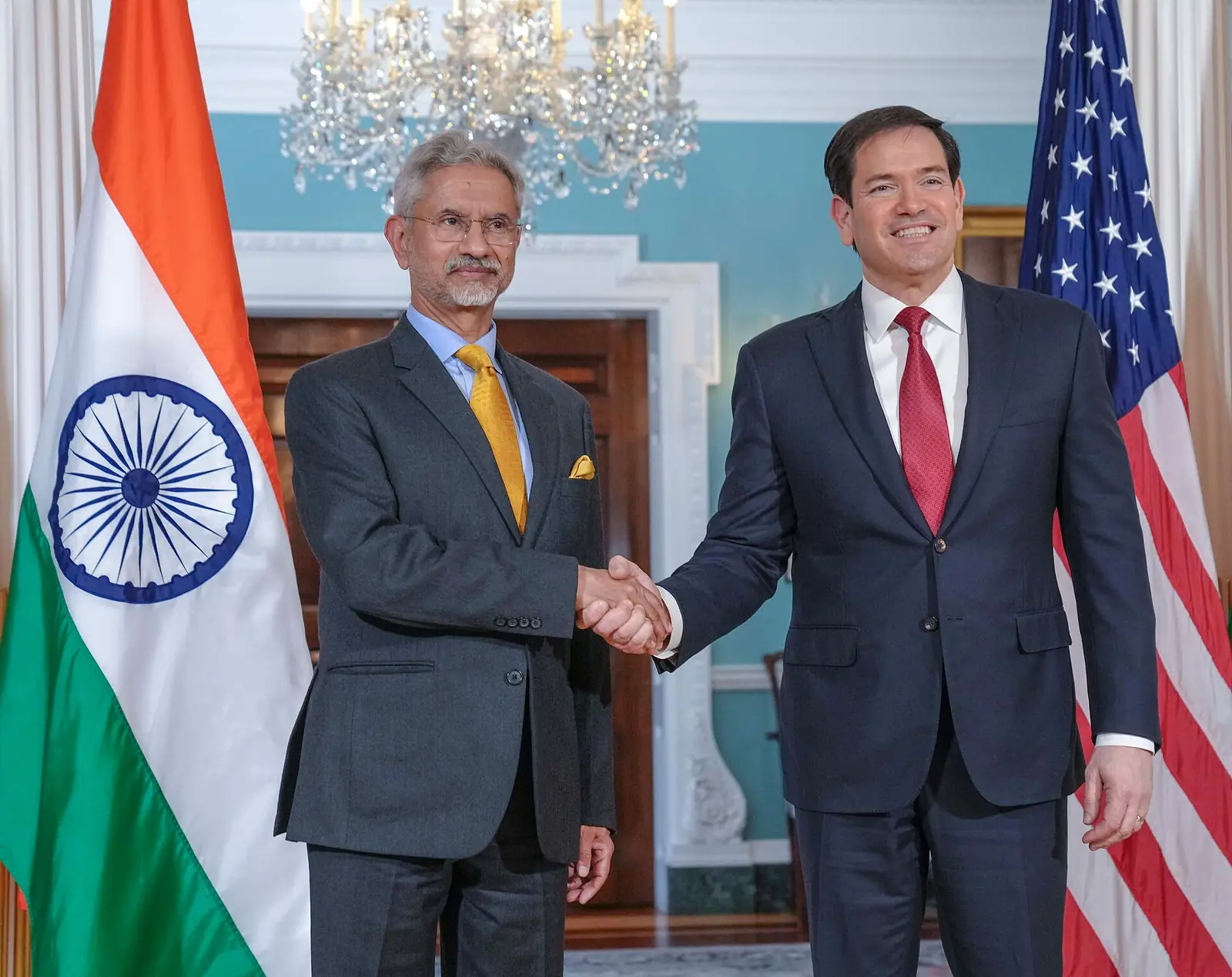
G20 foreign ministers end Atlanta talks without a joint communique; Jaishankar urges diplomacy and diversified supply chains
As of the evening of 1 November: India Today, citing PTI, reports a US chairman's statement instead of a communique; India's minister, speaking to ANI, called the sessions open and constructive.

Foreign ministers of the Group of 20 ended two days of talks in Atlanta without a joint communique, with divisions over Russia's war in Ukraine affecting the outcome, according to India Today, which cites the news agency Press Trust of India. This piece is as of the evening of 1 November.
The outcome
India Today says US Secretary of State Marco Rubio instead released a chairman's statement listing priorities such as energy and food security and freedom of navigation, without mentioning any agreements. Rubio told reporters he would not pretend the group was close to "universally accepted solutions", but said some G20 members were working together on some problems, particularly supply chains and critical minerals. India Today says Rubio described the first day as "very productive", met counterparts from Australia, India and Japan on Saturday, and led a final session on freedom of navigation in the Strait of Hormuz and the Red, Black and South China seas.
The same report says Rubio cancelled the traditional group photograph after European diplomats objected to Russian Foreign Minister Sergey Lavrov's inclusion and threatened to boycott it or walk out. It quotes Polish Foreign Minister Radoslaw Sikorski, attending a G20 meeting as a guest for the first time, as saying he was not surprised there was no consensus because participants in wars were at the table. Diplomats who spoke anonymously told PTI that a chairman's statement had long been the plan because of differences over the Russia-Ukraine war, the US-Israeli war against Iran, US tariffs and China's actions in the South China Sea, and that all sides agreed to try to make the leaders' summit in Florida, hosted by President Donald Trump, a success.
India's message
The Tribune, carrying an ANI report, says Jaishankar described three plenary sessions, on geopolitical challenges, energy and food security, and supply chains, as engaging, open and constructive; Asianet Newsable and ABP Live carry the same account. He said there are "big conflicts" with global ramifications and that "there are no military solutions; we have to find a diplomatic pathway", adding that India's advocacy for peace resonated with several ministers.
On energy, he spoke of a "distortion of the energy markets" and the "politicisation of energy flows", saying the Global South was bearing the brunt of shortages, per Asianet Newsable. He pointed to grain shipment disruptions from Black Sea bottlenecks and fertiliser shortages linked to tensions in the Persian Gulf and Red Sea corridors, per ABP Live.
On supply chains, he said "Today we need more diversified supply chains", per ABP Live. The Tribune reports that on Saturday he called on the G20 to resist "predatory practices", promote "the right to industrialise" and work towards the "de-politicisation of markets".
Still open
- Whether the differences narrow before the leaders' summit in Florida; India Today says participants agreed to try to make it a success.
- Which "two major conflicts" Jaishankar meant; the ANI-based reports quote him without naming them.
The record 4 reports
The reports this article is built from; 4 were read in full for it. Each link opens the outlet's own page.
- Nov 1, 2026
- The Tribune · ANIreadJaishankar at G20: Rules out military solutions to conflicts, calls for energy stability and diversified supply chainsNov 1, 2026
- Nov 1, 2026
- ABP LivereadJaishankar Stresses Dialogue To Resolve Global Conflicts, Calls For Diversified Supply Chains At G20 MeetNov 1, 2026